

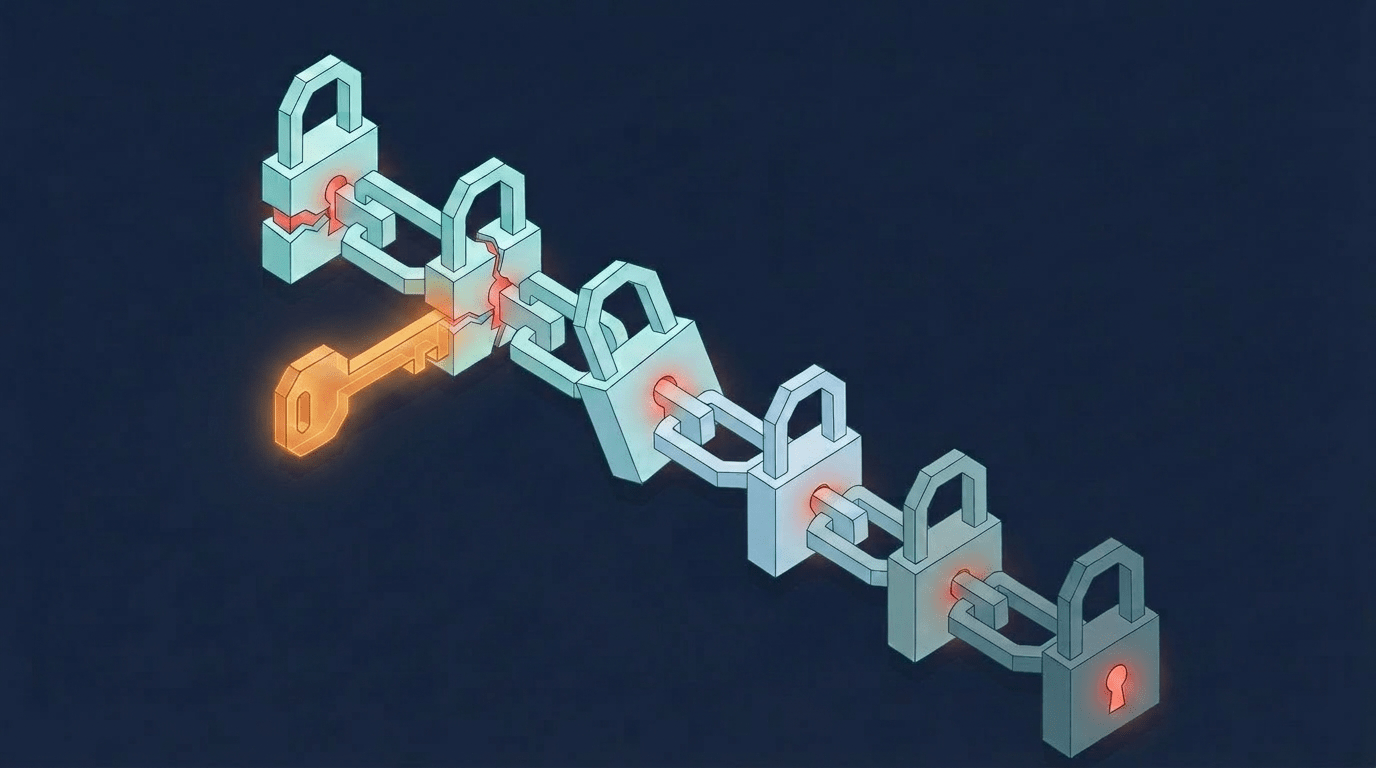
Of all the provider data fields that drive claim denials, the National Provider Identifier is the most consequential. An NPI error does not produce one denial. It produces a pattern of denials across every claim associated with that provider until the error is identified and corrected at the source.
The reason is structural. NPIs are the key payers use to look up everything else about a provider: enrollment status, contracted rates, network participation, specialty and taxonomy, credentialing record. When the NPI on a claim does not match the enrollment record the payer holds, the claim fails. Not because of the NPI alone, but because the NPI is the key that unlocks every other validation. A wrong NPI is not a single error. It is a validation blocker.
And the problem is widespread. Industry analysis published in 2026 found that 30% of provider records contain inaccurate or missing NPI numbers, and that provider data mismanagement contributes roughly $17 billion annually in unnecessary healthcare costs through claims processing errors and denials.
How NPI Errors Get Into Billing Systems
The most common NPI errors in billing environments are not typos. They are legacy records that have not been updated. A provider with multiple practice locations may have been enrolled under different NPIs at different times. A provider who has moved between group practices may have an individual NPI that is no longer associated with the billing entity the claim is being submitted under. A rendering provider’s NPI may be correct, but the billing provider NPI on the claim may reflect an old group affiliation.
The Type 1 versus Type 2 distinction compounds the problem. Every individual provider has a Type 1 NPI. Every group, facility, or organizational biller has a Type 2 NPI. Claims require both to be correctly linked, and the linkage between them is precisely what gets out of date when a clinician joins or leaves a practice, opens a new location, or changes their organizational affiliation. Industry research consistently places error or omission rates in payer-side provider records between 30% and 40%, which means a meaningful percentage of any submitted claim batch is carrying an NPI mismatch the billing firm did not cause.
The Credentialing Connection
NPI accuracy is inseparable from credentialing currency. NPPES, the National Plan and Provider Enumeration System, is the authoritative source for NPI data, but it depends on providers and organizations updating their records. When a provider changes practice locations, modifies their legal business name, or updates their specialty designation, those changes must be reflected in NPPES and then reconciled across every payer enrollment record and billing system that depends on that data.
That reconciliation does not happen automatically. It requires active data management. For billing firms serving multiple clients across multiple payer relationships, the volume of that reconciliation work is substantial. And when it does not happen, when a provider’s NPPES record updates but the billing system does not, the disconnect becomes a denial factory. The HFMA Claim Integrity Task Force’s standardized denial metrics make the consequence visible: initial denial rate, primary denial rate, and percentage of denials overturned are all distorted by upstream data drift that originated outside the billing operation.
What Proactive Organizations Are Doing
The organizations reducing NPI-related denials are not doing more manual checking. They are implementing continuous validation against NPPES and payer enrollment records at the provider identity level. Instead of validating NPIs at the time of claim submission, they are validating them on an ongoing basis and propagating corrections before those discrepancies reach the billing queue.
Polus HCP, as an example, processes the full NPPES national provider dataset, which contains more than 8 million NPI records across active and historical assignments, matches incoming roster submissions against it continuously, and surfaces discrepancies before they reach claims. The practical effect is that NPI errors are caught and resolved at the provider data layer rather than discovered at denial.
For submission staff: When you encounter an NPI-related rejection, the fastest path to resolution is not just correcting the claim. It is confirming whether the provider’s NPPES record matches your billing system’s record, and whether the discrepancy is isolated to one claim or present across the provider’s entire claim history. A single NPI correction that updates the source record prevents every subsequent denial instead of just the current one.
Ready to See What Provider Data Accuracy Can Do for Your Bottom Line?
If any of this resonates with what your team is dealing with, the next step is a conversation.
Email [email protected] or Schedule a Strategy Session. No sales pitch, just a working discussion about your current data posture and the revenue you’re leaving on the table.
We invite you to take a deeper dive. Check out these third-party and Datagence resources.
- Ideon: The Importance of Accurate Provider Data for Benefits Platforms in 2026
- HFMA Claim Integrity Task Force: Standardizing Denial Metrics
- NPPES National Provider Identifier Registry
- CMS NPPES Data Dissemination
- Aptarro: Medical Billing Stats 2025/2026
- Datagence: The Revenue Cycle Consequence
- Datagence: Provider Data Is Not a Compliance Problem. It’s a Revenue Problem.
- Datagence: Provider Data Enforcement Reckoning
- Datagence: Why Provider Directories Fail (And Always Have)